

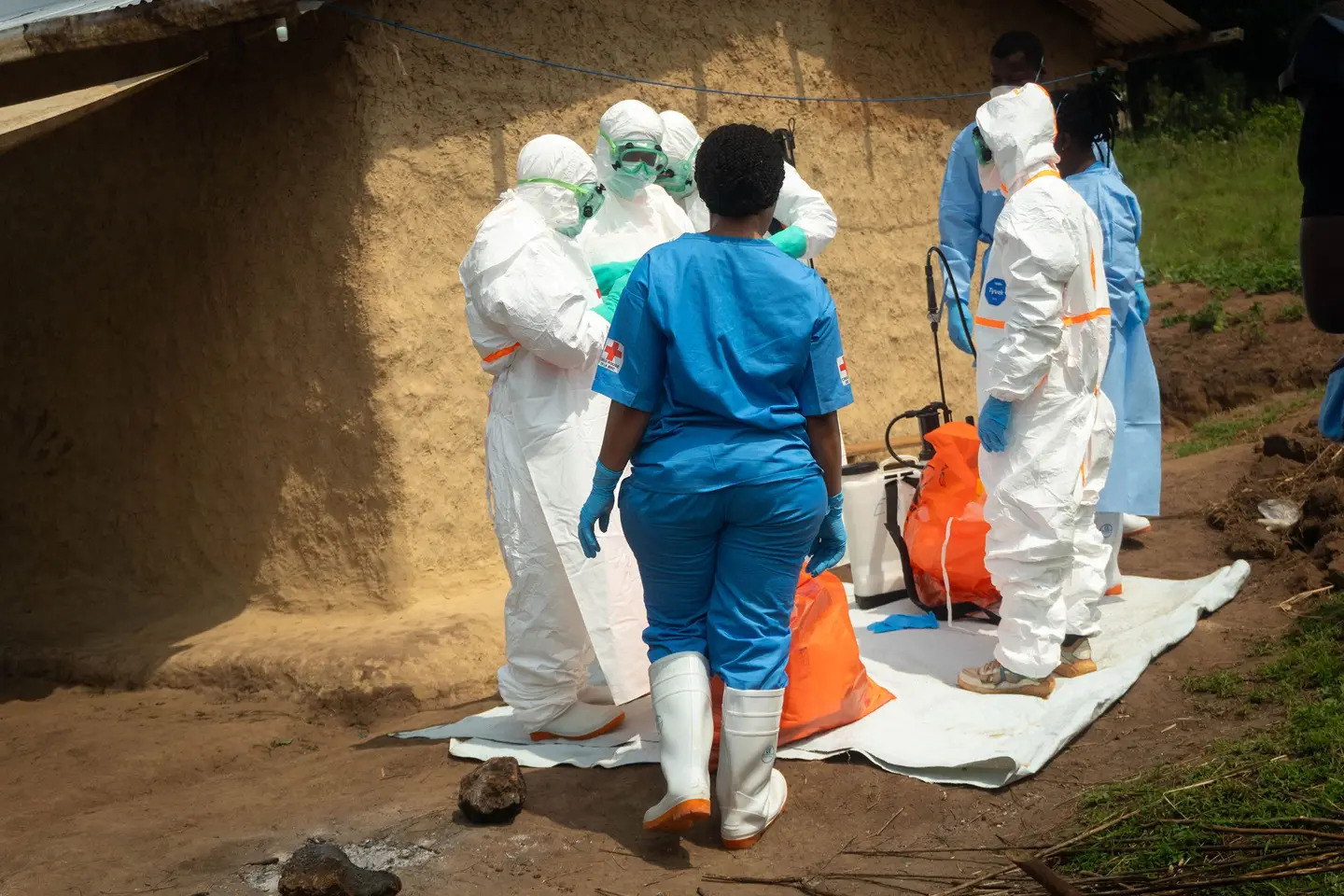
GENEVA/KINSHASA, 23 November 2026 (NNW Bureau) — Heavy fighting near a hospital in the Democratic Republic of the Congo’s Ituri province has disrupted Ebola-response operations and forced health workers and humanitarian partners to shelter inside a maternity ward, according to the World Health Organization.
WHO Director-General Tedros Adhanom Ghebreyesus said on Sunday that personnel had been sheltering for more than 24 hours as clashes continued close to the hospital. He warned that the situation endangered patients, their families and staff at a time when the outbreak already places extraordinary demands on local health services.
WHO and humanitarian partners were seeking contact with the parties involved in the fighting to organize safe passage for the medical team. Tedros called for the protection of health facilities, workers and patients, emphasizing that violence around treatment centres can interrupt urgent care beyond the immediate location of clashes.
Violence complicates disease control
Ituri and neighbouring North Kivu have been at the centre of the Ebola outbreak that began in May. Health teams need reliable access to patients, contact-tracing networks, safe transport and community cooperation to interrupt transmission. Road closures, attacks and forced displacement undermine those efforts, particularly when suspected cases must be traced and safely transferred for treatment.
The outbreak has continued at a high level despite months of response activity. As of 17 November, figures cited by the WHO indicated more than 11,600 cases and about 5,678 deaths in the DRC. Those numbers reflect a rapidly changing health emergency and remain subject to official updates.
Reports of repeated violence in eastern Congo have added a security dimension to an already difficult public-health operation. Communities affected by conflict may delay seeking care, while aid organizations must make difficult decisions about travel, staffing and protecting the people they assist.
Protection of medical services
International humanitarian principles require respect for healthcare personnel and medical facilities. Interruptions to vaccination research, laboratory testing, infection-control training and the delivery of supplies can have consequences long after a particular clash ends.
The WHO has stressed that safe access for medical personnel is essential to the Ebola response. The immediate need is to protect those sheltering in the hospital while ensuring that patients continue to receive necessary assistance.
Photo credit: Ebola-response personnel in Bembei, Ituri, August 2026, not the November fighting. Priscilla Lecomte / UNOCHA via Wikimedia Commons, CC BY-SA 2.0.
