

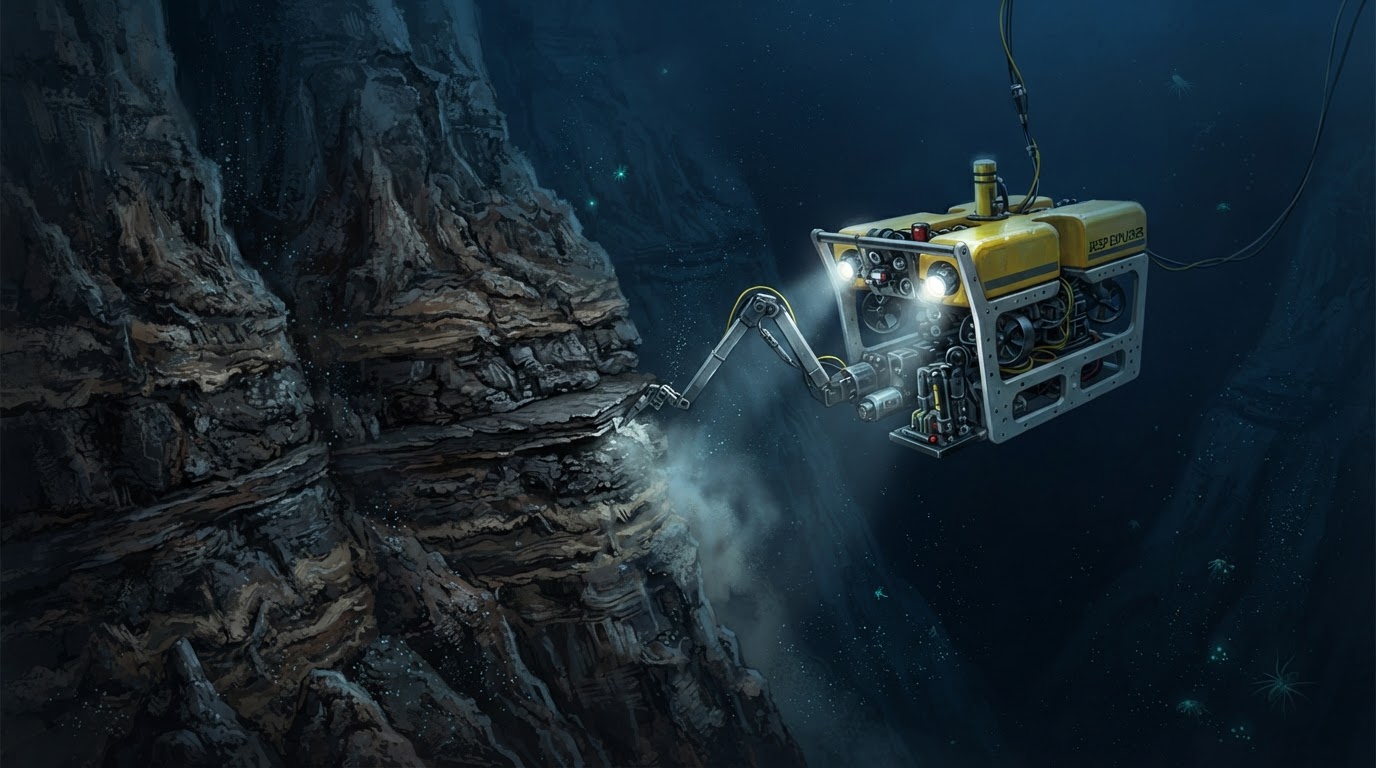
PACIFIC OCEAN, 23 November 2026 (NNW Bureau) — A research team exploring the slopes near the deepest part of the global ocean has identified what it describes as the deepest-known evidence of explosive volcanic eruptions on the seabed. The discovery, reported in the journal Frontiers in Earth Science on Monday, raises new questions about how the tectonic plates beneath the Mariana Trench deform and produce magma.
An unexpected find beneath the Pacific
Researchers used the remotely operated vehicle Jason/Medea to investigate the walls close to Challenger Deep, the deepest known part of the ocean floor. The remotely controlled submersible collected rocks during a 2024 expedition supported by the US National Science Foundation. Geological analysis identified a deposit associated with explosive eruptions, at approximately 6,148 metres below sea level.
Explosive volcanic eruptions at such depth are surprising because intense water pressure ordinarily makes it difficult for gas-rich magma to fragment in the ways familiar from eruptions on land or in shallow seas. The samples show what happened in the geological past; scientists did not observe a new eruption taking place during the expedition.
Revisiting the geology of the trench
The Mariana Trench formed where the Pacific plate descends beneath the Philippine Sea plate. The new material suggests that an adjacent region of the seafloor may be stretching and undergoing more varied volcanic and tectonic activity than previously understood.
The researchers found contrasts between older rocks towards the east and younger volcanic rocks to the west. The pattern could indicate that the two areas respond differently as the seafloor spreads or is pulled apart. More dating and sampling will be needed to test the interpretation.
Lead researcher Robert Stern of the University of Texas at Dallas said the evidence was unexpected because explosive volcanism near trenches is unusual. The findings could help refine models of deep-ocean processes and the evolution of one of Earth’s most unusual geological landscapes.
The research also underlines the importance of robotic access to places where direct human exploration remains impractical. At several kilometres below the surface, specialised instruments and careful sample handling are essential to distinguish ancient deposits from modern activity.
Visual: NNW original conceptual illustration of deep-sea research; not a photograph of the expedition.
