

Table of Contents
Winter storms are intensifying the risks faced by displaced families in Gaza while emergency shelter and food operations remain constrained by funding and access, the International Organization for Migration and the World Food Programme said in a joint statement on 17 November.
The agencies estimate that more than 1.7 million people remain displaced, around 1.4 million face acute hunger and approximately 1.98 million need shelter support. These are operational humanitarian estimates that can change with movement, access and assessments; they should not be read as a fixed census.
The warning brings shelter, food and site conditions into the same picture. A family living in a flood-prone displacement site may lose bedding or stored food in a storm, face greater exposure to illness and then have fewer hot meals available. Treating each need as a separate programme can miss how quickly one failure compounds another.
IOM said it requires 173 million US dollars to sustain its shelter response and a further nine million dollars for improvements at displacement sites. WFP reported a 436 million dollar six-month funding gap to serve two million people across Palestine. That WFP figure is not solely a Gaza funding requirement, an important distinction when comparing the agencies’ appeals.
Flood risk inside displacement sites
More than half of roughly 1,700 displacement sites are in flood-prone locations, according to the agencies. Temporary shelters offer limited protection when drainage fails, ground becomes waterlogged or strong winds damage tents and sheeting.
Site improvement is therefore more than the distribution of replacement materials. It can include drainage, safer pathways, waste removal, lighting and the identification of less exposed areas. These tasks require access for equipment and staff as well as coordination with the communities living at each site.
The winter response is also shaped by repeated displacement. Families who move again may lose contact with services, documentation and distribution points. Aid agencies must continually update where people are living, which makes reliable access and communication essential.
Food assistance under pressure
WFP said hot meals have been reduced to alternate days. That change illustrates how a funding or access constraint becomes a household-level decision. Families may be forced to stretch supplies, reduce meal size or prioritise some members over others.
Shelter conditions affect food security as well. Cooking may be unsafe or impossible in crowded and wet settings, while food stocks can be damaged by flooding. Support that delivers ingredients without considering fuel, storage and shelter may not meet the actual need.
The agencies’ statement attributes the pressure to a combination of winter weather, funding shortfalls and access restrictions. Reporting should retain all three factors. Weather can trigger immediate damage, but vulnerability is shaped by the condition of shelters, the availability of supplies and whether humanitarian organisations can move staff and materials.
A response measured by continuity
Humanitarian appeals are often judged by headline funding totals. In Gaza, continuity is just as important. Shelter repairs that arrive after repeated storms, or food assistance that alternates unpredictably, can leave families unable to plan even for the next few days.
The current figures are agency assessments, not independently verified outcomes, and the operating environment remains fluid. Even so, the warning is clear: winter assistance cannot be separated into isolated sectors. Food, shelter, health, drainage and access form one emergency system, and a failure in any part can quickly deepen the risks faced by displaced people.
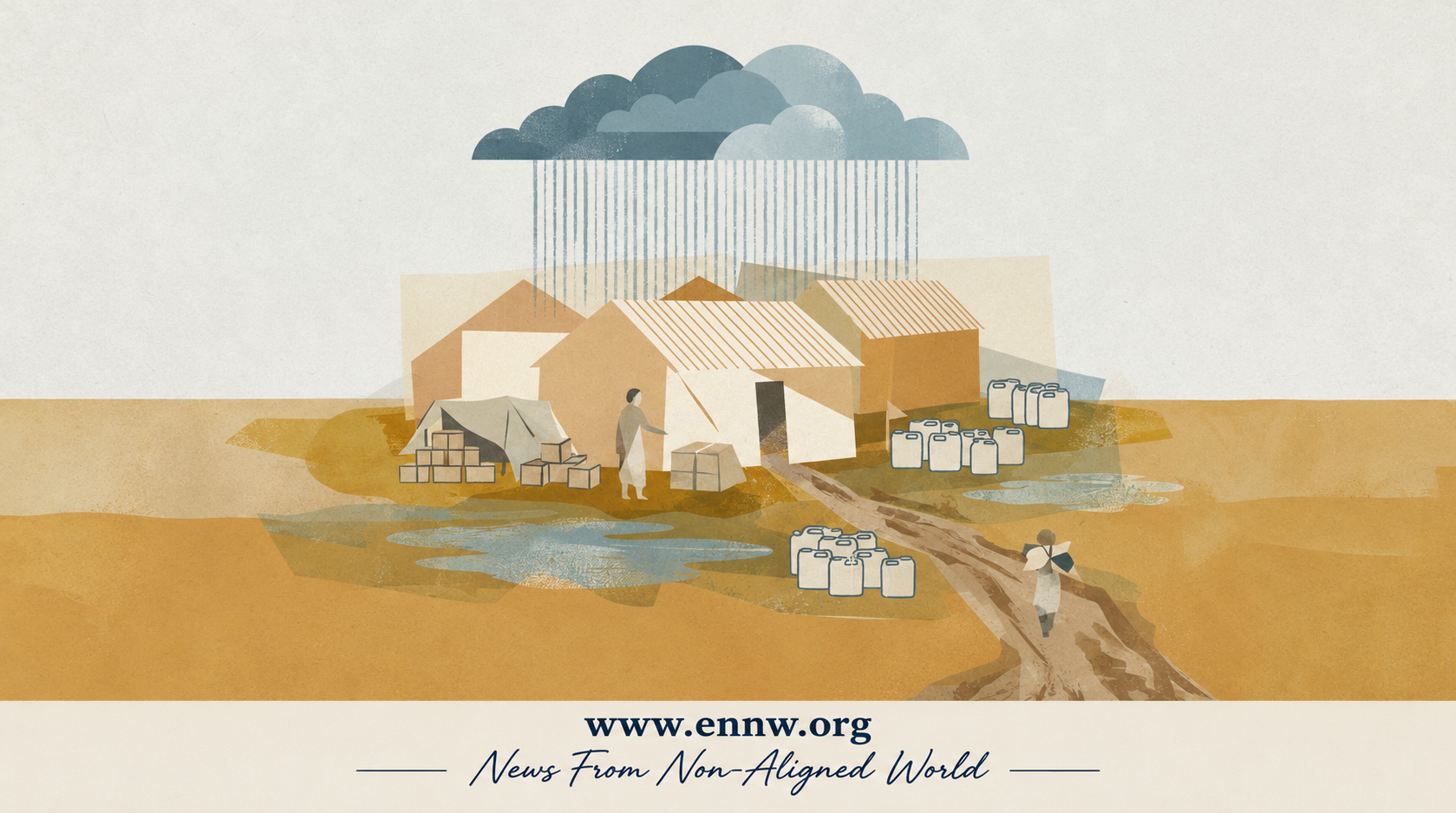
Conceptual illustration.
