

Climate-finance discussions often use broad categories of risk. Nepal is asking negotiators to make mountain-specific hazards more visible within those categories and the support attached to them.
In a 12 November COP31 update, Nepal’s foreign ministry described a high-level event co-hosted with Bhutan, Kyrgyzstan, Pakistan and Tajikistan. Foreign Minister Shisir Khanal called for accessible, predictable grant-based adaptation finance and support for communities facing mountain risks.
The ministry’s account also identifies glacier monitoring, satellite observations, early-warning systems and regional data sharing as priorities. These are proposed directions and diplomatic positions, not a newly agreed international funding allocation.
The relevance extends downstream. Decisions about monitoring and warnings need to connect institutions across different landscapes and administrative boundaries. Information becomes more useful when it reaches people with enough time and practical support to respond.
Nepal’s position therefore links the visibility of a risk with the design of a response. A dedicated place in negotiations may help frame the issue, but delivery depends on institutions, finance and usable information. As COP31 continues, the distinction between a proposal, a negotiated decision and a functioning programme remains central to assessing progress.
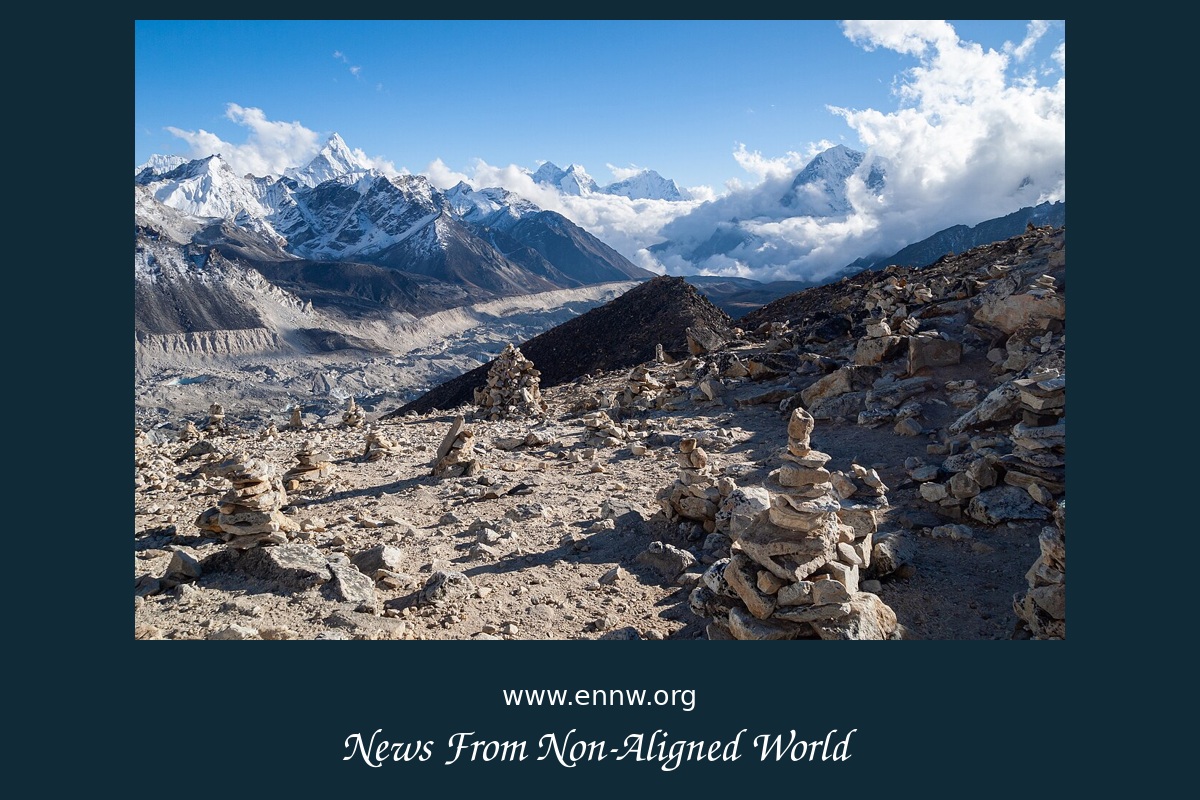
Photo: Vyacheslav Argenberg · CC BY 4.0. Archive illustration; not a photograph of the reported event. Photo date: 2009-10-19 15:49:00. Resized and framed by NNW; framed photograph under the same licence.

