

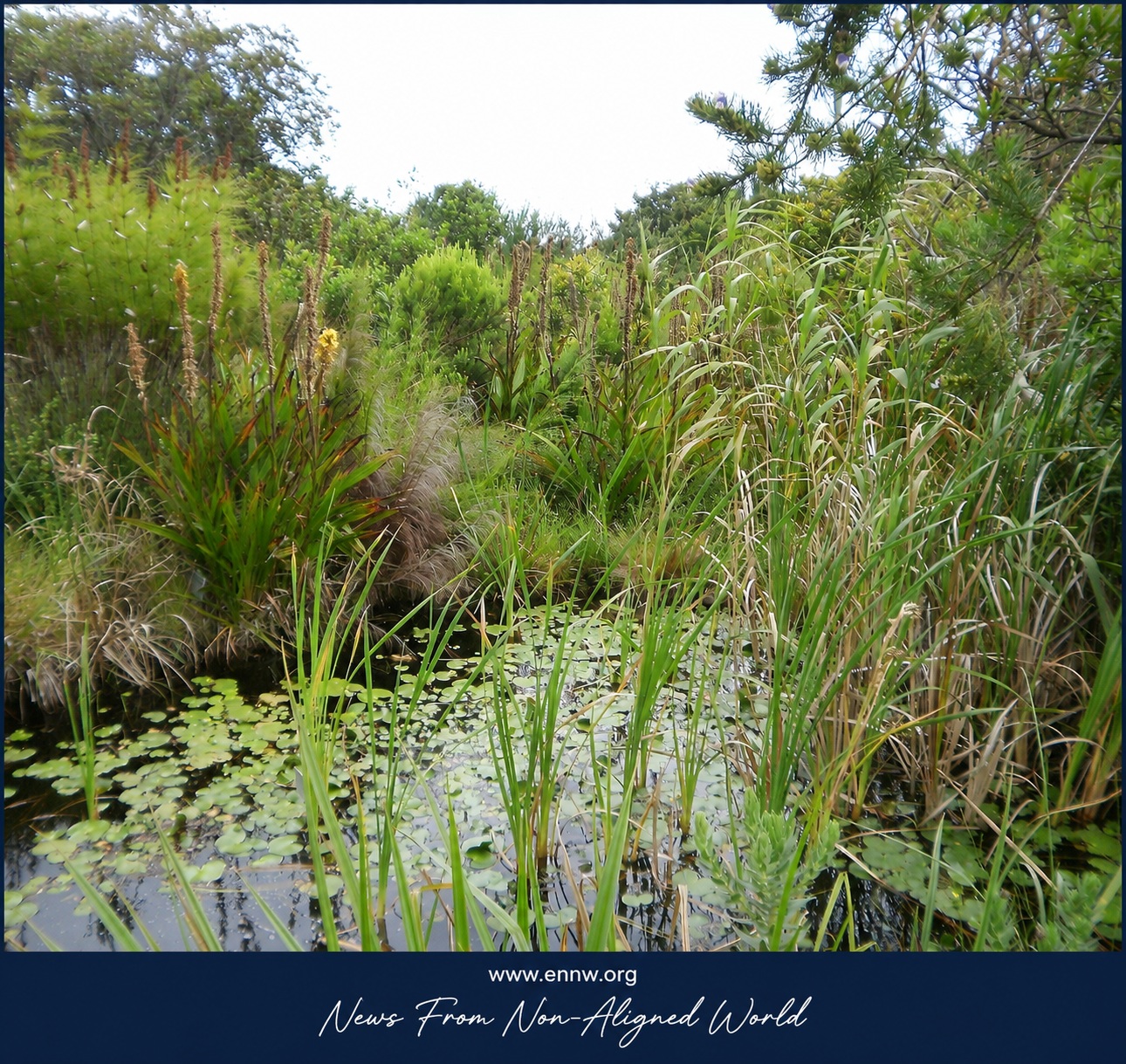
A Cape Town meeting on ecosystem restoration is placing implementation questions alongside international ambitions: who maintains restored landscapes, how progress is measured and how communities participate.
South Africa’s environment department announced that representatives from more than 20 countries would gather from 16 to 20 November for the Ecosystem Restoration Integrated Program’s second annual conference. The programme is financed by the Global Environment Facility and led by Conservation International.
The published agenda includes monitoring, sustainable finance, community engagement and private-sector participation. South Africa is also bringing experience from work on selected peatlands and their catchments, combining scientific restoration with policy and management questions.
The distinction between starting work and achieving recovery is central. An area placed under a project is not automatically an ecosystem that has recovered its functions. Assessment needs to consider what has changed, whether improvement lasts and how the people depending on the landscape are affected.
For countries in Africa, Asia and Latin America, exchanging implementation experience can be useful precisely because land conditions and institutional capacity differ. The meeting offers a forum for that exchange. Its occurrence should not be treated as proof that restoration targets have been met, and the department’s advance announcement provides no independent evaluation of programme outcomes.
Photo illustration adapted from: Abu Shawka · CC0. Archive illustration; not a photograph of the reported event. NNW branded adaptation.

