

Table of Contents
The global trading system is becoming more active in two directions at once. Governments are introducing more measures that facilitate trade, but they are also adding more restrictions, leaving exporters in developing economies to navigate a denser and less predictable policy environment.
A World Trade Organization monitoring review published on 17 November counted 1,048 trade-related measures introduced by members and observers in the first half of 2026, compared with 1,229 during all of 2025.
The comparison is not a simple measure of protectionism. The total includes 466 new facilitating measures between January and June, already more than the 391 recorded throughout 2025. It also includes 333 restrictive or otherwise non-facilitating measures, compared with 300 during the previous year.
The WTO estimated that the accumulated stock of import-related restrictive measures still in force covered trade worth about 5.4 trillion US dollars, equivalent to 21.3 per cent of world imports, at the end of June. This is the value of trade covered by measures, not tariff revenue, lost exports or the amount of trade prevented.
Complexity can be a barrier in itself
Large exporters can maintain legal teams, customs specialists and supply-chain systems to track policy changes. Smaller firms in developing economies often cannot. For them, the cost of understanding a new licensing requirement, standard or customs procedure can matter almost as much as the formal tariff.
A measure that facilitates trade in one market may coexist with a restriction in another. Exporters can therefore face an uneven map: faster digital customs clearance at one border, tighter controls at the next, and additional documentation for a particular product or origin.
This complexity is especially difficult for businesses entering international markets for the first time. They may have limited working capital and depend on a small number of buyers. A delay at the border or uncertainty over eligibility can quickly affect cash flow and employment.
Facilitation still offers opportunity
The rise in facilitating measures should not be overlooked. Simplified procedures, reduced duties and more predictable customs systems can lower costs for exporters and importers alike. For landlocked and small economies, improvements in transit and documentation can be particularly valuable.
The policy question is whether developing countries can take advantage of those openings. That requires domestic institutions able to communicate new rules, certify products and resolve border problems. Trade agreements and digital platforms are less useful when small firms cannot obtain the required information or finance.
Regional cooperation can help. Shared standards, interoperable customs systems and mutual recognition can reduce the number of separate procedures a firm must master. Such measures can make regional markets a practical stepping stone rather than merely a political objective.
External shocks add uncertainty
The WTO review also referred to disruption involving the Strait of Hormuz and to demand for goods related to artificial intelligence. Both examples show that trade policy is interacting with security, technology and supply-chain concentration.
Energy and shipping disruptions can raise costs far from the immediate event. Rapid demand for advanced computing equipment may benefit some producers while widening the gap between countries with access to strategic technologies and those that remain import-dependent.
For Non-Aligned and Global South countries, the response cannot be simply to choose between openness and protection. They need policies that preserve market access, support domestic production where viable and avoid rules that create hidden barriers for smaller economies.
What the figures do and do not show
The WTO data describe measures and the trade they cover. They do not by themselves reveal the effect on prices, jobs or individual countries. A restrictive measure may be narrow but consequential; a facilitating measure may cover a large trade value yet remain difficult for small firms to use.
The practical test is therefore distribution. Which exporters gain from faster procedures? Which sectors face new compliance costs? Are lower-income countries able to participate in the trade enabled by policy changes?
The latest monitoring report does not offer a single verdict on globalisation. It shows a trading system being actively reshaped. Developing exporters will need clearer information, stronger regional institutions and a voice in rule-making if they are to compete within that more complicated landscape.
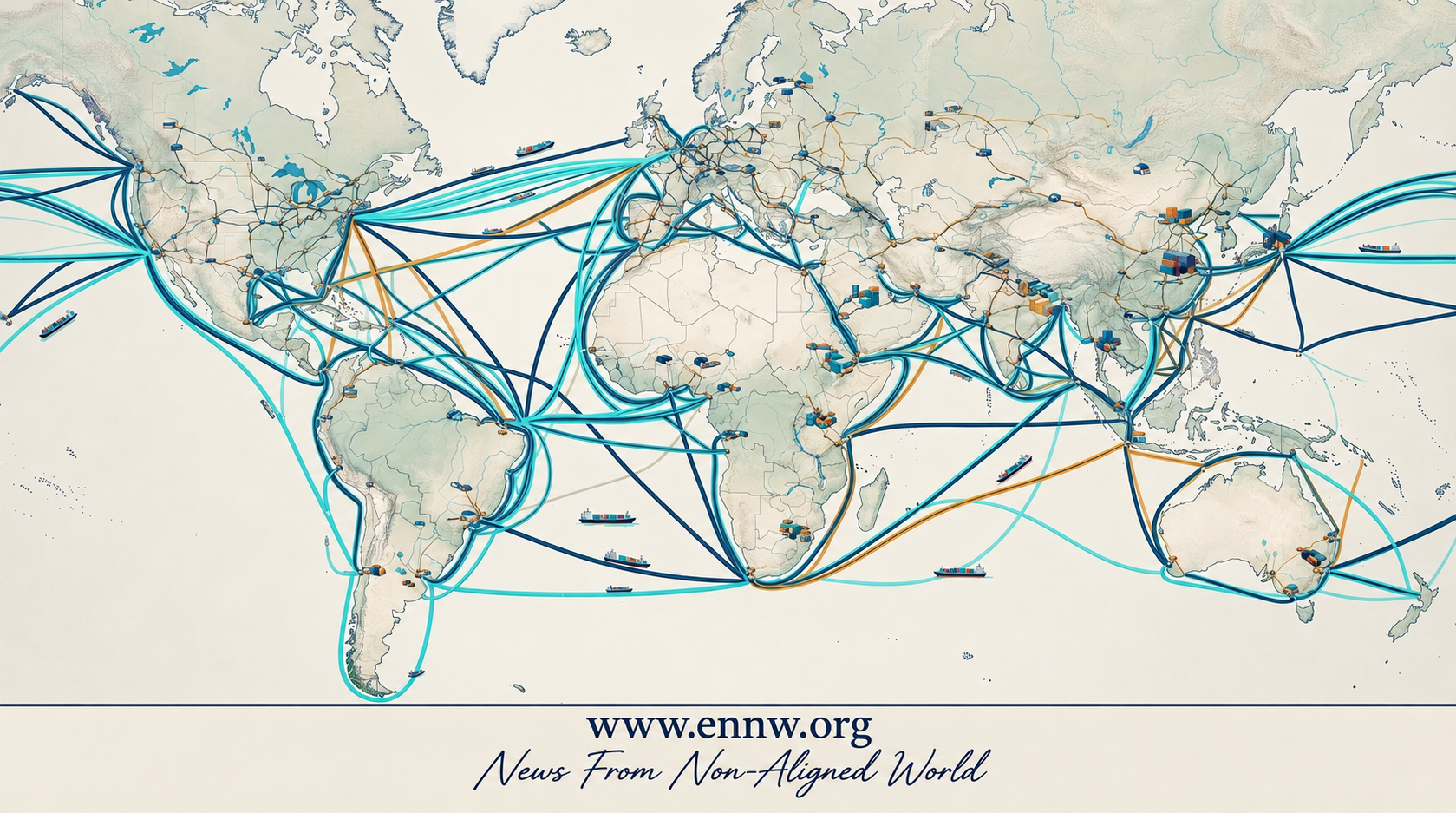
Conceptual illustration.
