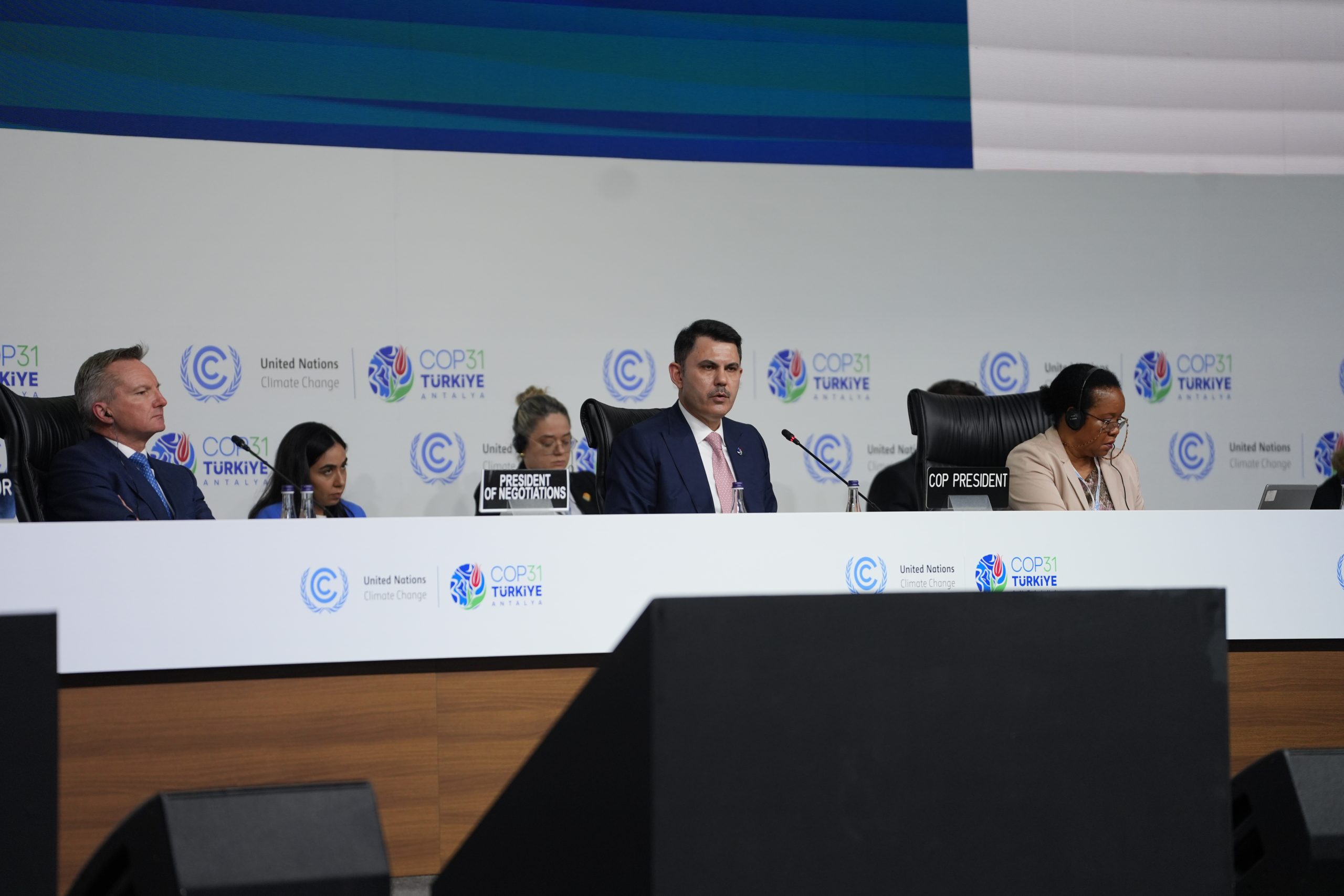
ANTALYA, Türkiye, 23 November 2026 (NNW Bureau) — The 31st United Nations Climate Change Conference concluded in Türkiye on 22 November without an overarching political agreement, revealing persistent disagreements over the pace of the transition away from fossil fuels and the financing needed to support vulnerable countries.
The talks continued beyond their planned closing date as negotiators sought language that could bridge differences among nearly 200 participating governments. In the end, countries could not reach consensus on the presidency-led decisions meant to give the conference a unified political outcome. The failure did not mean that every negotiating track was abandoned: governments made decisions in other areas, including work relating to a just transition.
UN Climate Change Executive Secretary Simon Stiell acknowledged the disappointment in remarks at the closing ceremony. He said the process had been unable to agree on issues related to both presidency-led decisions, while noting that important negotiations had moved forward. The United Nations also emphasized that the absence of an overall agreement does not diminish the urgency of rising temperatures and mounting climate impacts.
Different priorities at the negotiating table
Negotiations exposed a divide over how directly the summit’s final text should address fossil fuels. Some countries, including members of the European Union and climate-vulnerable states, argued that a meaningful political decision needed more explicit language on the transition away from coal, oil and gas. Other delegations were reluctant to accept formulations they considered too prescriptive or inadequately balanced with development needs.
Climate finance was another source of concern. Developing countries have long argued that more predictable funding is essential for adaptation, climate-resilient infrastructure and a transition that does not compromise economic development or energy access. Small island states and other highly exposed countries continue to face the consequences of climate change despite contributing comparatively little to historic greenhouse-gas emissions.
What happens after Antalya?
The outcome places renewed attention on the period between annual climate summits. Existing commitments, national energy policies, development financing and decisions already reached through the UN climate process will determine whether governments make progress despite the setback in Antalya.
For countries across the Global South, the central issue remains how to translate climate commitments into affordable energy, protection against extreme weather, resilient agriculture and access to international finance. The negotiations demonstrated that agreement on a broad political declaration can be elusive even when many governments support the underlying need for action.
The conference therefore ends with a mixed record: some multilateral work was carried forward, but countries did not deliver the wider consensus that delegates and vulnerable communities had sought.