

Table of Contents
BRUSSELS, 23 November 2026 (NNW Bureau) — Indonesia and the European Union have formally signed comprehensive trade and investment agreements, marking an important step in a partnership between Southeast Asia’s largest economy and the EU’s single market.
Representatives signed the Indonesia–EU Comprehensive Economic Partnership Agreement (CEPA) and Investment Protection Agreement (IPA) in Brussels on 21 November. The signings follow years of negotiations and are intended to create a more predictable framework for trade, market access and investment.
New opportunities for exporters
Indonesia’s foreign ministry said the CEPA would ultimately remove tariffs on a large share of products exchanged with the EU, with some reductions beginning after entry into force and others implemented over transitional periods.
The agreements are expected to benefit sectors such as footwear, textiles, manufacturing and processed commodities, while opening additional avenues for European companies to invest in Indonesian industry, energy and technology.
Indonesia has identified value-added manufacturing and industrial development as priorities. The investment arrangement aims to provide legal clarity for businesses undertaking longer-term projects, although the actual effect will depend on implementation and the broader economic environment.
Ratification remains necessary
The signature does not mean that every provision has entered into force immediately. Both parties must complete their respective ratification and domestic legal procedures before the full arrangements can operate. Indonesian officials indicated that implementation was being targeted for 2027, subject to the required steps.
The agreements also reinforce a broader international trend toward diversifying trade relationships and making supply chains more resilient. Businesses in both markets are expected to assess new rules on market access, compliance and investment protections as the legal process advances.
A developing-economy perspective
For Indonesia, the central test will be how far tariff advantages translate into higher-value exports, productive investment and employment. Smaller businesses may need support with standards, documentation and market information to benefit from the agreement.
For the EU, closer links with Indonesia provide access to a major market and an opportunity to develop partnerships in strategic industries. The signing is a major diplomatic and economic milestone; the practical results will emerge only after the rules are implemented.
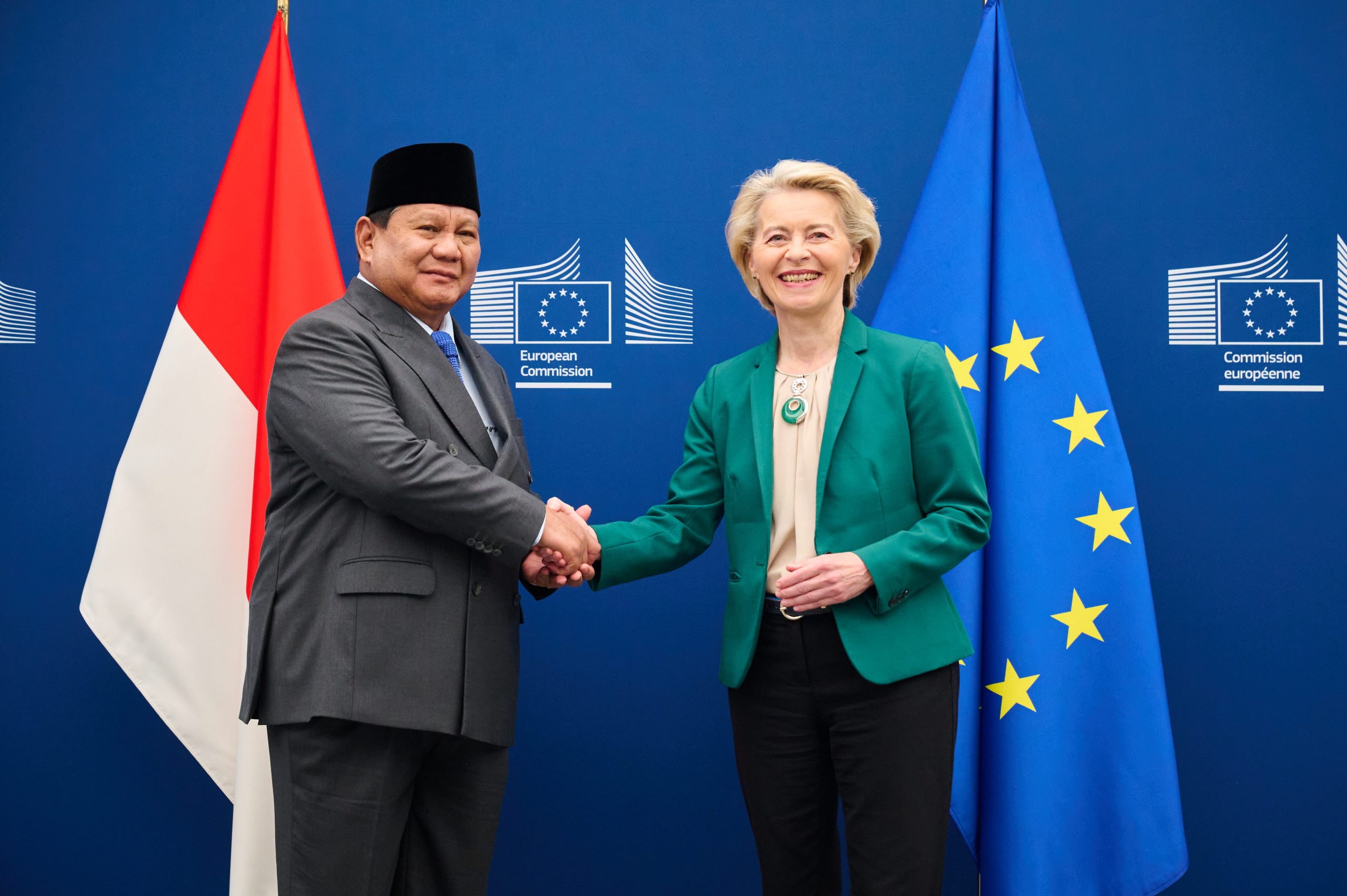
Photo credit: Archive photo: Indonesian President Prabowo Subianto and European Commission President Ursula von der Leyen in Brussels, July 2025; not the November 2026 signing. Dati Bendo / European Union, CC BY 4.0.
