

Table of Contents
SEOUL, 23 November 2026 (NNW Bureau) — South Korea’s education minister, Choi Kyo-jin, resigned on Sunday after public criticism of last-minute changes to anti-cheating procedures for the country’s high-stakes college entrance examination.
President Lee Jae Myung accepted the resignation shortly after Choi offered to step down. The controversy focused on rapid changes designed to prevent the use of artificial intelligence and concealed electronic devices during the College Scholastic Ability Test, or Suneung.
Rules changed close to examination day
The Suneung, held on 19 November, is one of South Korea’s most important national examinations. Its results play a major role in university admissions, making predictable procedures and fair enforcement especially important for students and parents.
Education officials introduced additional safeguards after a separate cheating controversy involving technology-enabled assistance in a professional examination. The measures included tighter controls on electronic devices and more intensive supervision of test candidates.
Critics argued that the changing instructions left students and teachers uncertain about which items were prohibited and how the rules would be enforced. Officials said the entrance exam was completed without a major disruption, but the confusion itself became a serious political issue.
Minister accepts responsibility
In his resignation statement, Choi acknowledged that late preparations caused inconvenience to test takers and the wider public. He said he accepted responsibility for the ministry’s failure to prepare the measures sufficiently in advance.
President Lee’s decision to accept the resignation immediately put attention on the appointment of a successor and on whether examination authorities will review their methods for handling new cheating technologies.
Technology challenges examination systems
AI-assisted devices have created fresh questions for educational regulators around the world. Institutions must consider how to identify prohibited assistance without introducing intrusive, confusing or inconsistent measures.
South Korea’s experience illustrates the practical difficulties of adapting established examination systems to rapidly changing technologies. Future preparations will likely be judged not only by whether cheating is prevented, but also by whether students receive clear and stable instructions with enough time to comply.
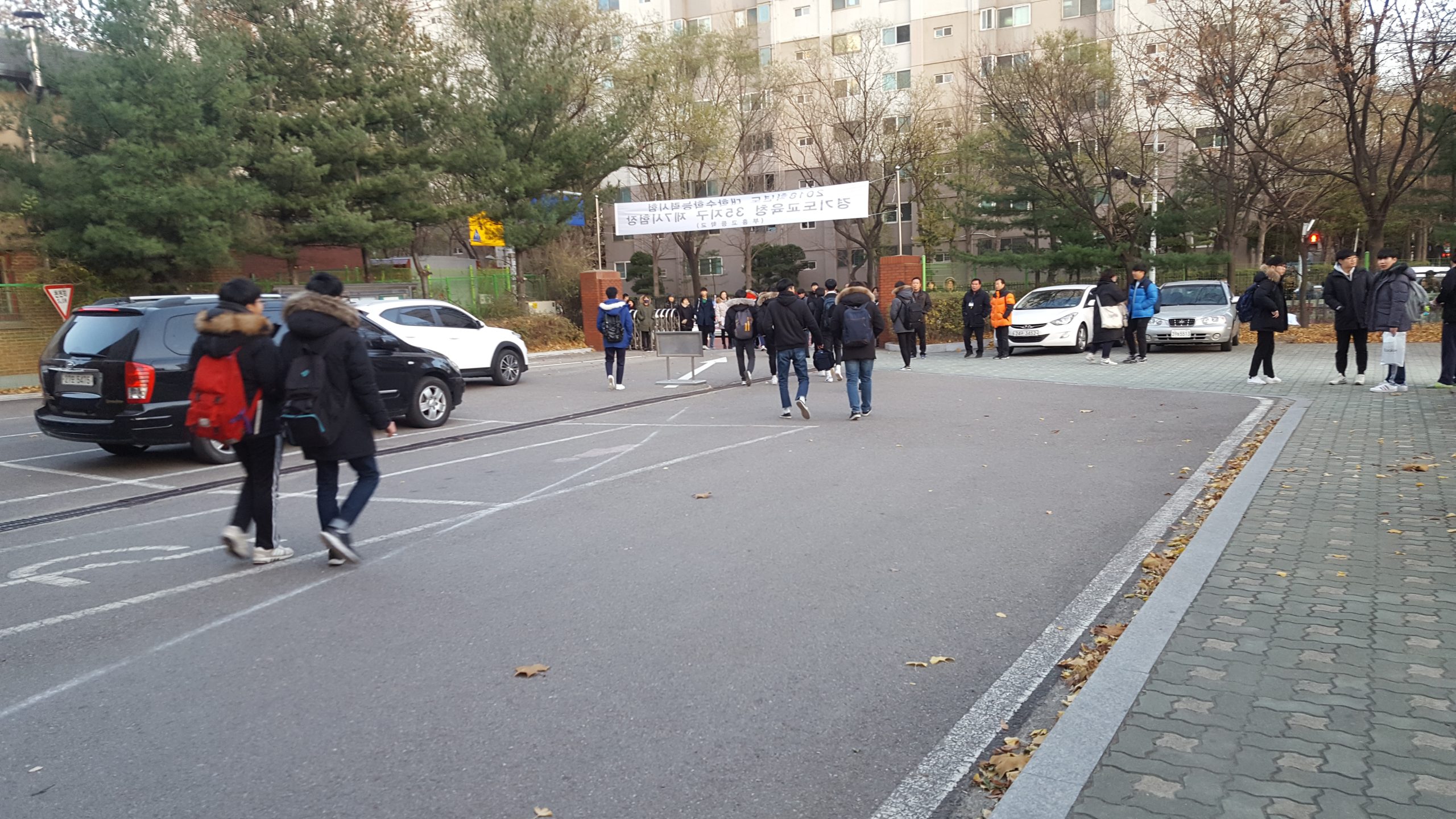
Photo credit: Archive photo: Students leaving Puhung High School after a college entrance examination in 2017; not the November 2026 exam. 고려 / Wikimedia Commons, CC BY 4.0.
