

A group of 21 governments has joined the World Health Organization and UNICEF in a new call to reduce obesity prevalence by 2030, placing food environments, schools, physical activity and affordable treatment within one policy agenda.
The initiative, launched on 17 November under the title “Bending the Curve by 2030”, sets a goal of reducing national obesity prevalence by five per cent. The figure is a target rather than a measured result, and it will need to be interpreted carefully: a reduction in prevalence is different from a five-percentage-point fall, and countries will begin from very different baselines.
WHO estimates that more than one billion people live with obesity and says the condition affects roughly one in seven people worldwide. It also reports that obesity overtook underweight in 2025 as the most common form of malnutrition among people aged five to 19. Those estimates underline why obesity policy can no longer be treated only as a matter of individual choice or specialist medical care.
Participating countries include Bahrain, Botswana, Brazil, Mauritius, the Philippines and South Africa. Their involvement gives the initiative particular relevance for the Global South, where health systems often have to respond simultaneously to undernutrition, infectious disease and rapidly rising rates of diet-related illness.
A wider policy frame
The declaration brings together measures that are frequently handled by separate ministries. It calls for healthier food environments, improved school meals, clearer food labels, opportunities for physical activity, early intervention and access to treatment. In practice, that means health agencies cannot deliver the agenda alone. Education, agriculture, finance, trade, urban planning and social-protection policies will also shape whether healthier choices are affordable and available.
For lower- and middle-income countries, the affordability question is central. Fresh food, safe public spaces and continuing clinical care are not distributed evenly. Policies that rely mainly on personal advice may have little effect where households face high food prices, limited transport or weak primary-care coverage. A credible national plan therefore needs to connect prevention with the conditions in which people buy food, travel, work and attend school.
The same is true of treatment. Obesity can raise the risk of diabetes, cardiovascular disease and other chronic conditions, but access to counselling, monitoring and medicines varies sharply. Expanding treatment without strengthening prevention would leave the causes of rising prevalence largely untouched; concentrating only on prevention could leave people already living with obesity without appropriate care.
Measuring progress
The pledge is neither a binding treaty nor evidence that participating countries have already reduced obesity. Its value will depend on national implementation, financing and transparent measurement. Governments will need to explain which population groups are being reached, whether healthier school meals are actually available, how food marketing rules are enforced and whether treatment is affordable outside major cities.
Comparable data will matter as well. National averages can conceal large differences by income, age, sex and location. If progress is reported only through a single prevalence figure, policymakers may miss communities where the burden is still rising.
The initiative nevertheless provides a useful shared frame. It treats obesity as a public-health and development issue shaped by markets, institutions and the built environment. For participating Global South countries, the next test is whether that broad understanding leads to practical policies that people can see in schools, clinics, shops and neighbourhoods.
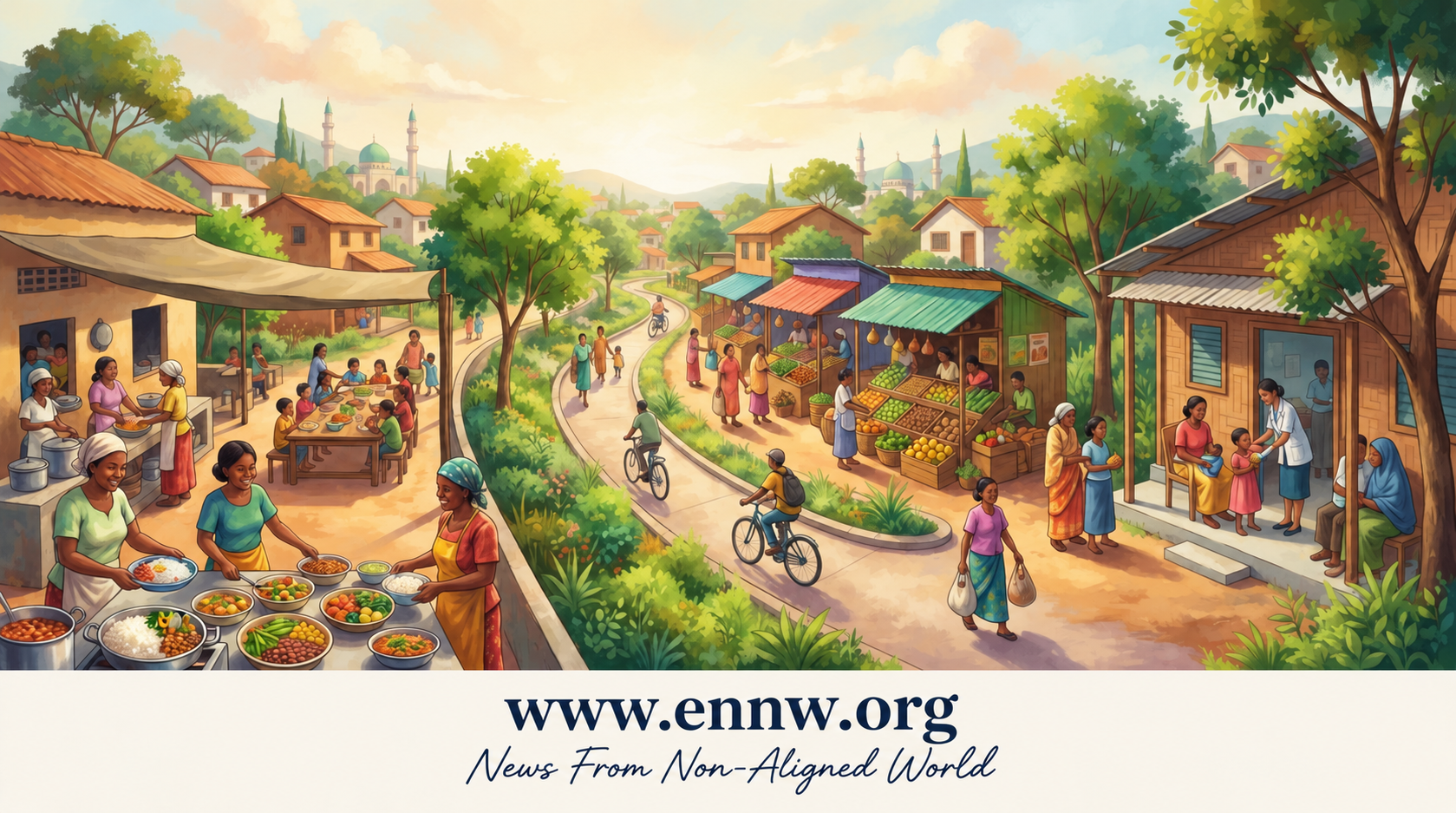
Conceptual illustration.
